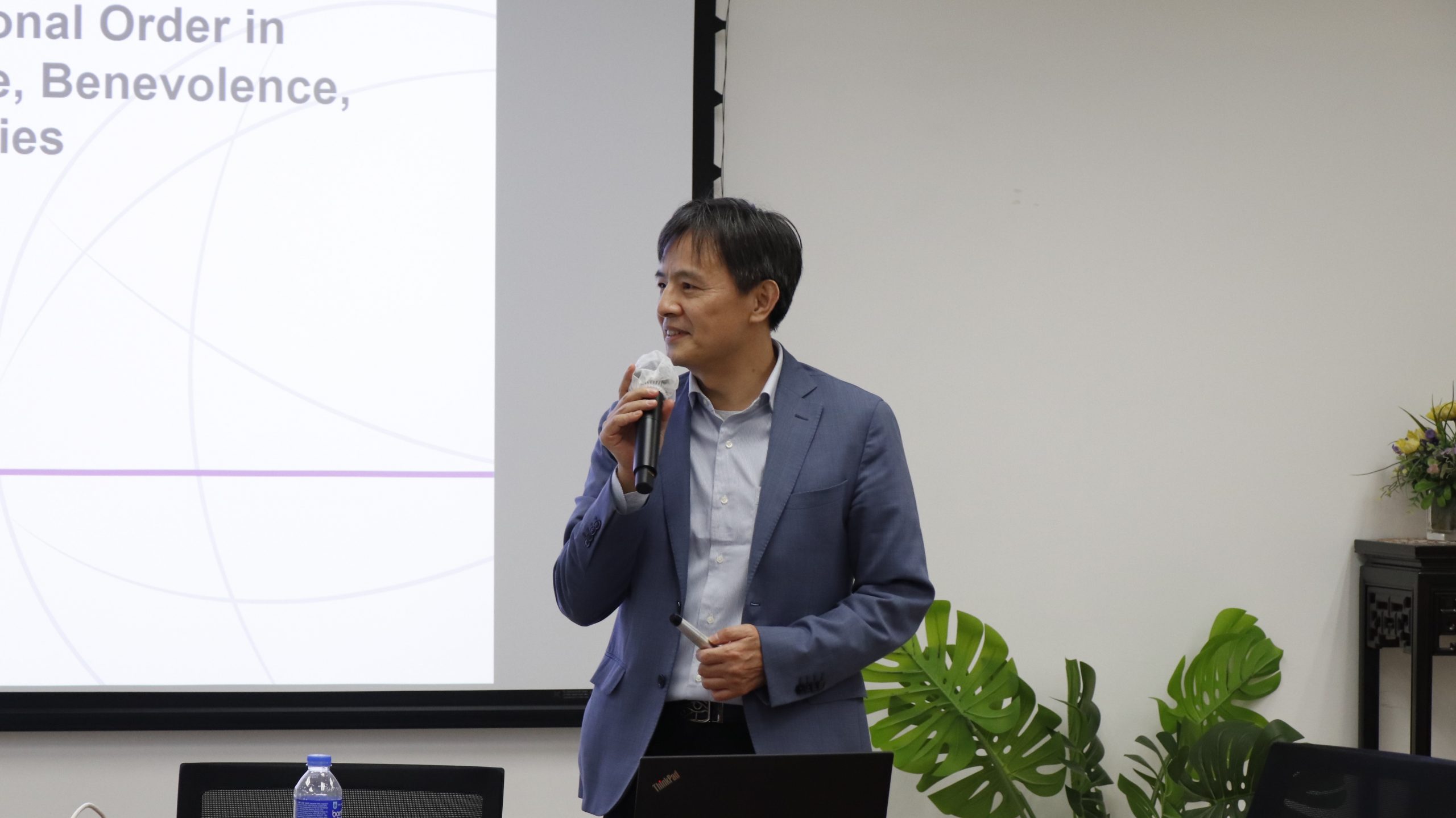
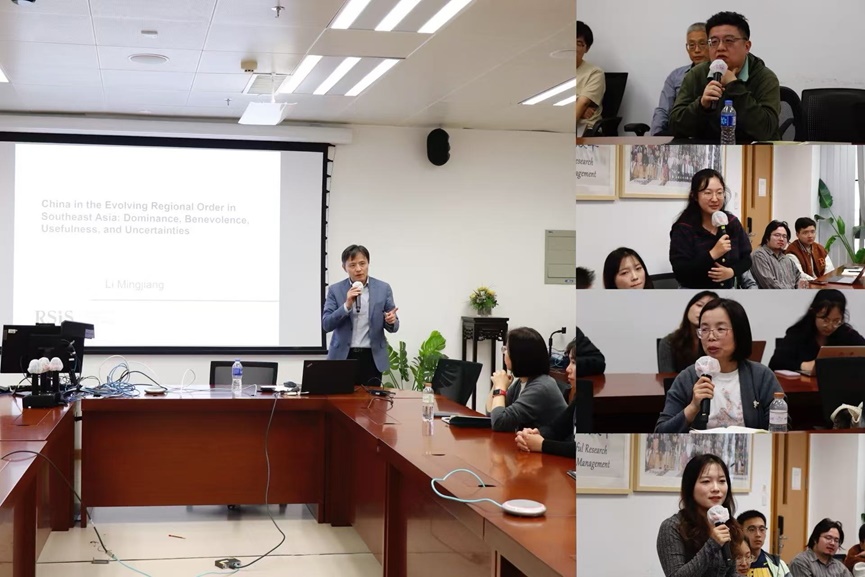
On November 26, 2025, the Institute of Global and Public Affairs, at the Faculty of Social Sciences at the University of Macau, successfully hosted a lecture under the IGPA 2025 Lecture Series.
Professor Mingjiang Li, Associate Professor and Provost’s Chair in International Relations, as well as Associate Dean and Head of Graduate Studies at the S. Rajaratnam School of International Studies (RSIS), Nanyang Technological University, was invited to deliver a lecture titled “China–Southeast Asia Relations in a Changing Regional Order: Transformation and the Road Ahead.”
Professor Li reviewed the evolution of China-Southeast Asia relations over the past two decades, from cautious engagement to deepening economic and political cooperation. He analyzed how trade, investment, and connectivity initiatives such as the ASEAN-China Free Trade Area and the Belt and Road Initiative broadened and deepened bilateral relations. At the same time, he discussed emerging tensions surrounding the South China Sea, strategic trust, and economic asymmetry. Situating these dynamics within the wider geopolitical landscape of Southeast Asia, Professor Li examined the growing involvement of major powers including the United States, Japan, and India. He highlighted the challenges of managing strategic competition and sustaining ASEAN’s centrality, while outlining opportunities for cooperation amid ongoing power shifts.
Faculty members and students took part in a lively discussion on prospects for a stable and inclusive regional order, ASEAN’s balancing role among major powers, and the strategic options available to smaller states navigating great‑power rivalry. The lecture offered valuable insights into the complexity of contemporary Southeast Asian geopolitics and China’s evolving regional engagement.
2025年11月26日,澳門大學社會科學學院全球與公共事務研究所(IGPA)舉辦IGPA2025系列講座。本次講座邀請李明江教授主講,主題為:變動中的區域秩序:中國-東南亞關係。李明江教授現任新加坡南洋理工大學拉惹勒南國際研究院副教授、教務長特任國際關係講座教授兼研究院項目主任。
李明江教授在講座中系統回顧了過去二十年中國與東南亞關係從審慎接觸到深度合作的演進過程。他剖析了中國—東盟自由貿易區及“一帶一路”倡議如何通過貿易、投資與互聯互通,顯著拓展了雙邊關係的廣度與深度;同時也探討了南海爭端、戰略互信不足與經濟不對稱等日益凸顯的挑戰。李教授將雙邊關係置於東南亞地緣競爭加劇的宏觀背景下進行考察,論及美國、日本、印度等主要國家在此區域的互動。他強調,當前面臨雙重挑戰:一是如何有效管理大國戰略競爭,二是如何維護東盟在區域架構中的中心地位;與此同時,他也指出在動態變化的權力格局中仍存在合作機遇。
在交流環節,與會者圍繞穩定包容的區域秩序的前景、東盟在平衡大國關係中的作用,以及小國在大國競爭中的戰略選擇等議題展開了深入探討。本次講座為理解東南亞地緣政治的複雜性及中國持續演進的區域參與策略,提供了富有啟發的學術視角。